7 Hard Lessons I Learned Debugging Freight Rate APIs Under Deadline Pressure
When rate APIs fail, quoting stops. This field guide shows the failure patterns, quick checks, and tool workflow that keep logistics teams moving.
3 SEO headline options
- 17 Hard Lessons I Learned Debugging Freight Rate APIs Under Deadline Pressure
- 25 Freight API Bugs That Quietly Break Quotes at the Worst Time
- 39 Fixes for Carrier API Errors Before Your Ops Team Loses Another Night
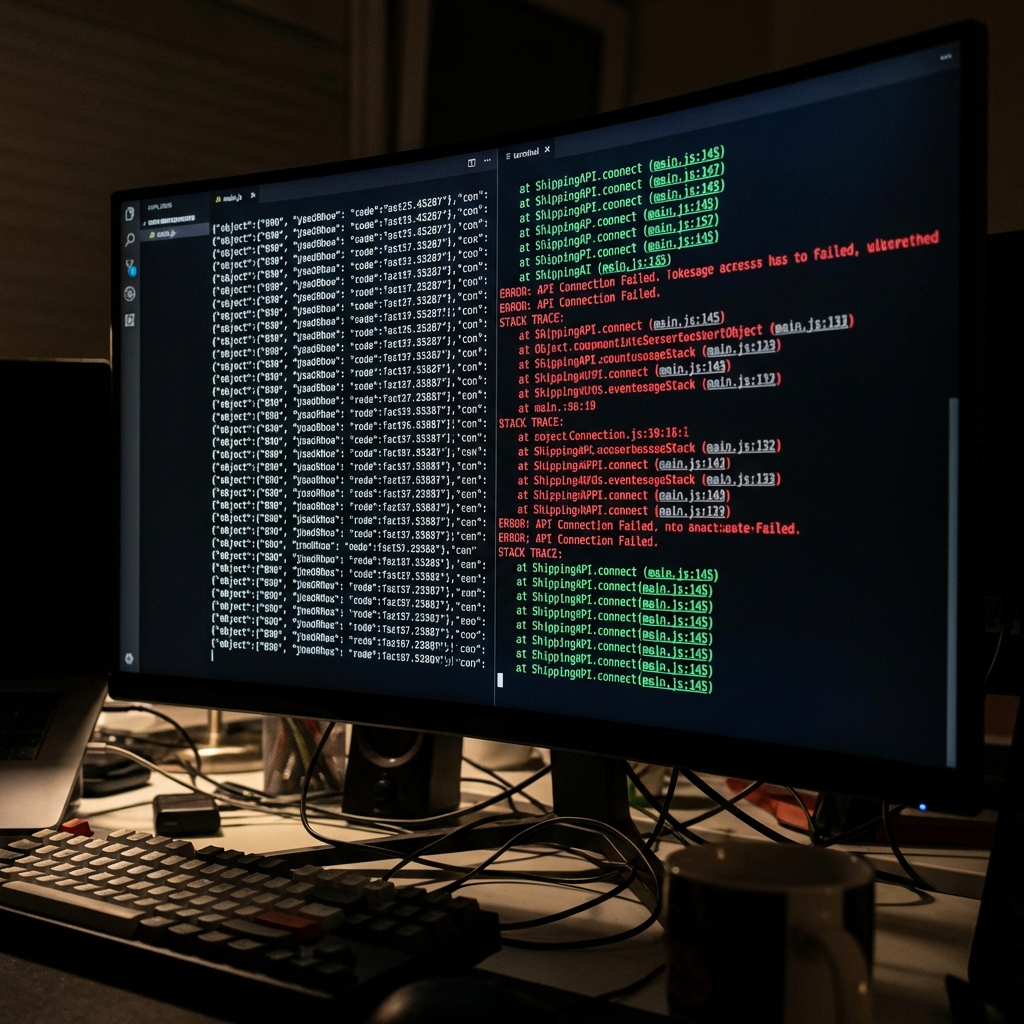
Quotes stop the moment a freight API breaks.
The sales rep is waiting. Ops is staring at the pickup cutoff. The carrier portal works, but your integration returns "invalid request" and tells you nothing useful.
I have spent too many late nights in that exact loop. The fastest fix was never "log more and hope." It was a repeatable checklist.
Why This Hurts More Than a Normal App Bug
In logistics, a broken API does not just annoy engineers. It delays quotes, blocks bookings, and weakens trust across the whole team.
One failed request can turn into three expensive questions:
- Did we send bad shipment data?
- Did the carrier change something quietly?
- Can sales still quote before the customer walks away?
That is why I now validate shipment basics with the Freight Class Density Calculator and the DIM Weight Calculator before I blame the transport layer.
What I Learned in the Field
Experience 1: A hidden character broke a production payload.
I copied a sample JSON body out of a carrier PDF. Locally, it worked. In staging, every request failed.
The cause was a zero-width space at the beginning of the payload. It took hours to find because the request looked correct in plain logs.
Experience 2: Token timing fooled us, not authentication itself.
One carrier integration returned clean quotes for almost an hour, then started throwing 401 errors right before end-of-day tendering.
The token was valid in theory.
Our cache simply refreshed too late for that vendor's real production behavior.
Experience 3: Freight class formatting created fake "schema" errors.
I once sent class 92.5 exactly as a human would write it.
The carrier expected 925.
The response blamed the payload type, but the real problem lived in a legacy enum.
One Reliable Story I Still Reference
A regional distributor I supported had its quote screen go dark less than an hour before same-day pickups closed. The root cause was not network instability. It was a carrier-side credential update that shortened the safe token window without warning.
We recovered because request IDs, token issue time, and shipment payload hashes were logged together. Without that paper trail, support would have pushed the blame back to us.
The Table I Use Before Escalating to the Carrier
| Error pattern | What it usually means | First check | Better long-term fix |
|---|---|---|---|
400 Bad Request with vague validation text | Hidden character, wrong field casing, or missing schema field | Compare the raw payload bytes and the docs sample | Sanitize copied templates and enforce schema validation before send |
401 Unauthorized after stable traffic | Token cache window is too optimistic | Log token issue time, expiry, and request time together | Refresh tokens early and keep vendor-specific TTL rules |
| Freight class rejected | Legacy enum or formatting mismatch | Validate class output against a trusted density check | Normalize vendor-specific class values in one mapper |
| Rates look too high | Dimensions or units are wrong | Recheck inches, pounds, and accessorial flags carefully | Add preflight validation on every quote request |
| Carrier timeout | Upstream slowdown or weak retry logic | Capture latency and request IDs first | Add fallback logic and rate freshness rules |
Pro Tip:
Keep one saved "golden payload" per carrier in production format, not in the format shown in a PDF or slide deck.
Pro Tip:
Log business meaning, not just raw JSON. "Class 92.5 pallet, 48x40x62, residential liftgate" is easier to debug than a blob of fields.
7 Checks That Save Me the Most Time
- Confirm the exact unit of measure for every dimension field.
- Strip invisible characters from copied payload templates.
- Compare sandbox behavior with production behavior.
- Log token issue and refresh time together.
- Normalize freight class and accessorial enums in one place.
- Validate shipment math before calling the carrier.
- Save request IDs for every failed quote.
None of this is glamorous. All of it protects quote speed.
Where the Website Helps Instead of Guessing
Before I send any rate request, I want shipment data to be boring. That is the goal.
I use the freight class density workflow to confirm class logic. I use a DIM weight check to catch dimensional surprises. If the quote still looks off, I compare it against the Landed Cost Estimator so finance sees the full downstream impact.
That workflow turns "the API is broken" into a smaller and more solvable question.

Ready to optimize?
Validate Freight Class Before Your Next API CallIf your team is seeing strange rate responses, start by validating the shipment data. Most carrier bugs feel mysterious only until the payload becomes trustworthy.
Meta description
Freight APIs fail in messy ways. Use 7 checks to isolate token, payload, and freight-class bugs before daily quotes stall or margins slip.